

Echoes Of Shiraz
About The Book
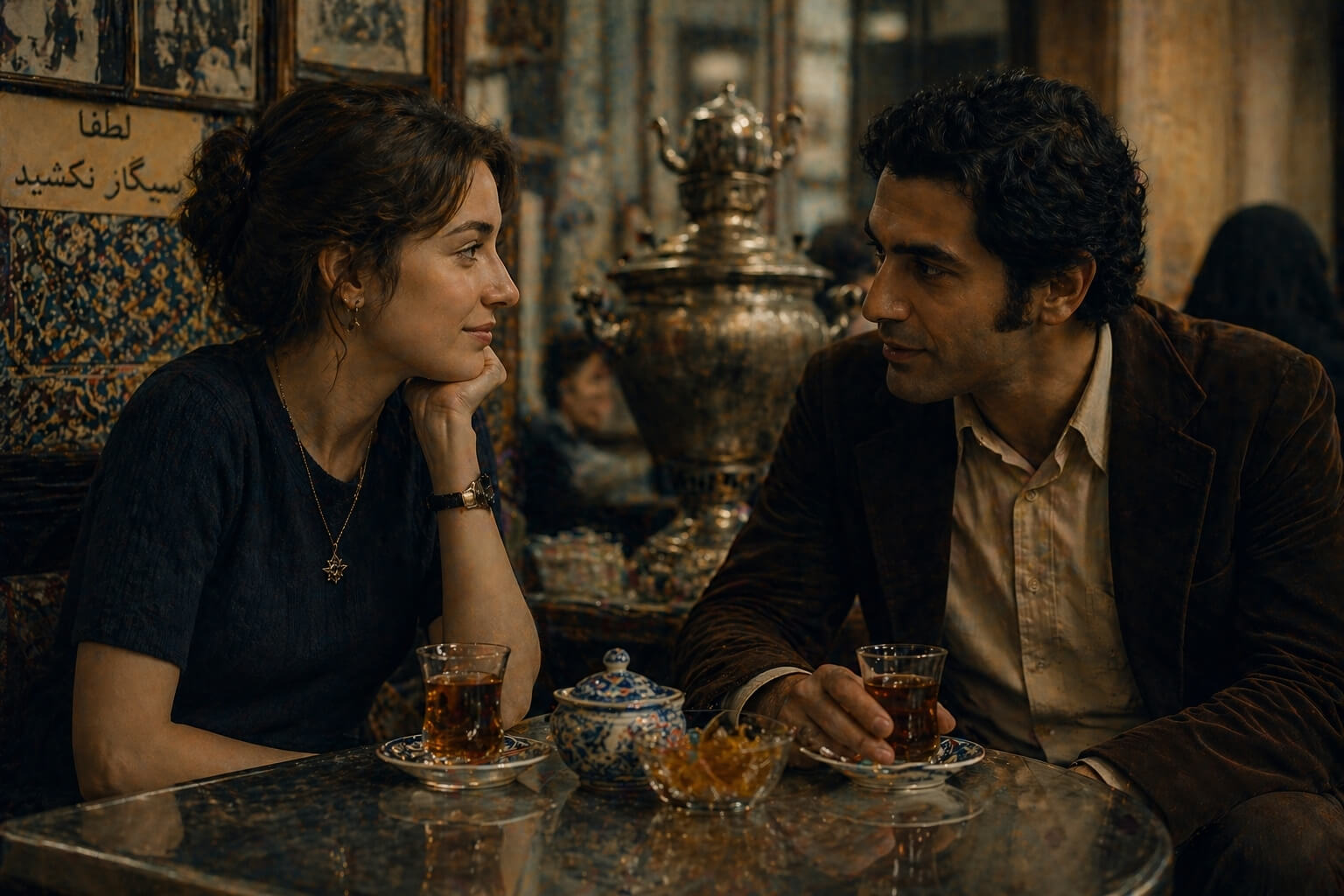
Two cities divided by history. Two musicians tuned to the same impossible frequency.
The Story
Echoes Of Shiraz follows a mother and daughter whose lives are bound to a country one of them can no longer enter and the other has never seen. In 1970s Tehran, a young Israeli woman follows her engineer husband to a city she does not yet know how to read; in the courtyards, libraries, and long amber afternoons of pre‑revolution Iran, she falls in love with a man she can never claim and carries both his memory and a devastating secret out of the country. Decades later in contemporary Tel Aviv, her daughter Shiraz, an oud player who has taught herself Persian modes in secret, composes toward a silence at the centre of her family: her mother’s refusal to speak about Iran.
When Shiraz joins an underground online forum for musicians on opposite sides of the Iranian digital divide, she begins exchanging encrypted messages and audio files with Aran, a setar player in Tehran whose work vibrates at the exact frequency she has inhabited all her life. Over months they fall in love the way two instruments fall into resonance, without ever deciding to, until a folder appears, a request is made, and a journey begins toward a city that has lived inside her since birth. What she discovers there unravels everything she thinks she knows about her family, her lover, and herself.
Setting and structure
At once an intimate love story and a literary espionage novel, Echoes Of Shiraz moves between 1976 Tehran and present‑day Tel Aviv, Istanbul, and Lisbon. Instead of treating intelligence work as a game of states, the book turns the tools of espionage inward: the briefings, the operational silences, the careful control of information become the architecture of a family secret handed from one generation to the next. The mission that sends a daughter across borders is also a return to the unfinished business of her mother’s past.
Themes
At its heart, the novel is about inheritance: not of money or property, but of memory, silence, and sound. It asks what music can carry across a border that nothing else can cross, how love survives the distances carved by history and politics, and what happens when a daughter finally listens to the thing her mother could never say.
Readers drawn to literary fiction, mother–daughter stories, and character‑driven espionage will find in Echoes Of Shiraz a narrative that treats cities as living characters and secrets as a kind of dark matter shaping every orbit. The novel speaks to anyone who has grown up at a cultural crossroads, who has inherited a silence without being told its origin, and who suspects that the lives before theirs still ring in the music they choose, the languages they reach for, and the loves they are able, or unable, to keep.